
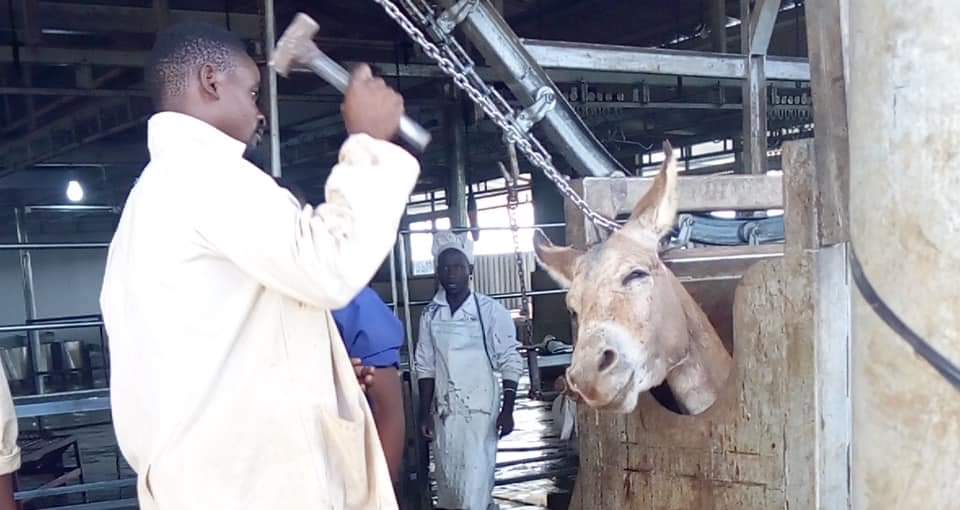
The donkeys slaughtered for export to China are bludgeoned with hammers on their head before having their skin ripped off, even if they are still conscious after the knock. The hides are transported to China, where they are used for medicinal purposes and to make snacks and beauty products.
Millions of donkeys are being brutally slaughtered each year for the sole purpose of creating a Chinese medicine known as ejiao. Demand for ejiao has spiked so dramatically during the past decade that China now imports donkey skins from around the world, including North America. Unfortunately, the U.S. government continues to allow American equines to be live-exported across our borders to both Canada and Mexico for butchering and commodification, including selling off the skins of our donkeys and wild burros.
WHAT IS EJIAO?
The skins of donkeys have been used as a traditional Chinese medicine called “ejiao” for thousands of years. Ejiao (eh-gee-yow) is a hard gel that’s used in food and drinks, or in beauty products such as face creams. Although there is no science-backed support on its efficacy, it’s believed to improve a variety of conditions such as bleeding, dizziness, insomnia and dry cough.
With the recent surge in popularity, the ejiao worldwide market is estimated to be worth over $25 billion. With no alternative formulations being offered by manufacturers, it’s consumer demand and profiteering that’s fueling the massacre of donkeys around the globe.
FACTS
- The global donkey population is 43.5 million. The donkey population in China alone has decreased from 11 million a few years ago to 5.4 million in 2016 (FAOSTAT, 2016). Marketing for ejiao is contributing to increased demand for donkey skin outside China which is increasing the global trade and poaching of donkeys to fill the need.
- Donkeys are poorly suited to intensive breeding practices due to long gestation periods, low fecundity, and a high propensity to abortion and mortality caused by stress. Although the ejiao industry in China is investing heavily inbreeding donkeys, this is not currently meeting the demand.
- National demand for ejiao in China would require 2.5 to 4.5 million donkey skins a year, yet they are only able to get 1 million/year thus, threat of unsustainable utilization and skyrocketing prices for donkeys is high as demand has out stripped supply.
BAN EJIAO SALES IN THE USA
The United States is the third largest importer of ejiao products in the world, valued at $12,000,000 in annual sales. Despite it being an unethical commodity, sites such as Amazon continue to allow the sale of donkey skin products on their platforms.
To prohibit U.S. sales or the transport of ejiao products made from donkey skins, the Ejiao Act, H.R.5203, has been introduced in the U.S. House.
Help make it illegal to import or purchase ejiao products in the United States by urging your U.S. Representative to cosponsor the bill!
Elizabeth white-


 The M Files